
The Ultimate Guide to Inventory Turnover Ratio: Maximizing Cash Flow
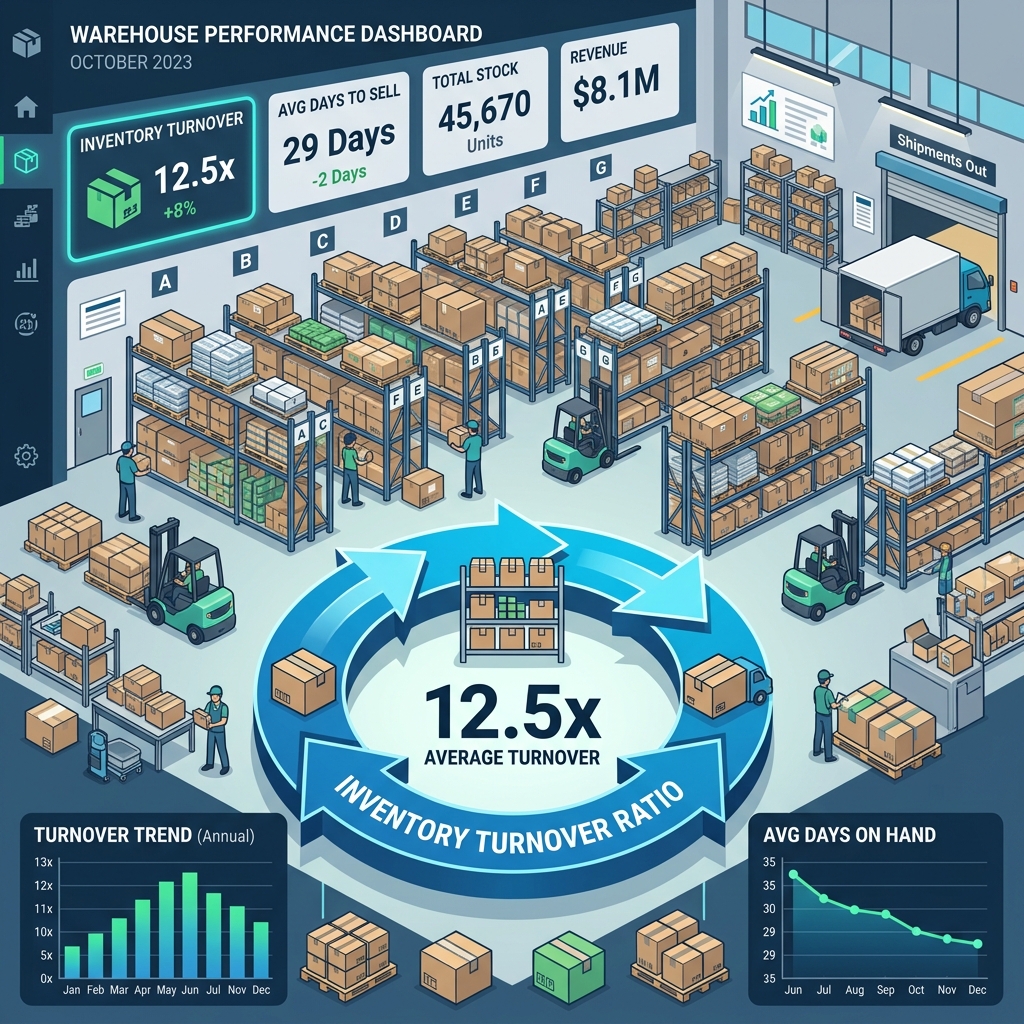
In physical product businesses, inventory is often the single largest asset on the balance sheet. However, many founders mistakenly view large stockpiles as a sign of security. In reality, sitting inventory represents trapped cash�capital that cannot be used for marketing, hiring, or expansion until those goods are sold. This comprehensive guide covers everything you need to know about inventory turnover.
What is the Inventory Turnover Ratio?
Managing inventory efficiently is the cornerstone of any successful retail or e-commerce business. When cash is tied up in stock that does not move, the business loses out on crucial opportunities to reinvest in growth. Understanding this metric allows business owners to balance the delicate act of having enough product to meet demand while avoiding excess. Overstocking leads to high storage costs, increased risk of obsolescence, and ultimately, lower profit margins. On the other hand, a highly optimized supply chain ensures that capital flows continuously through the business. This dynamic interplay between purchasing, storing, and selling dictates the financial health of the organization. To properly evaluate performance, one must look at historical trends and compare them against industry standards. Regularly auditing your inventory processes can unveil inefficiencies that might otherwise go unnoticed. Adopting modern inventory management software provides real-time visibility into stock levels, preventing both overstock and stockouts. A rigorous approach to tracking COGS and average inventory guarantees that financial reports reflect the true state of the business.
Managing inventory efficiently is the cornerstone of any successful retail or e-commerce business. When cash is tied up in stock that does not move, the business loses out on crucial opportunities to reinvest in growth. Understanding this metric allows business owners to balance the delicate act of having enough product to meet demand while avoiding excess. Overstocking leads to high storage costs, increased risk of obsolescence, and ultimately, lower profit margins. On the other hand, a highly optimized supply chain ensures that capital flows continuously through the business. This dynamic interplay between purchasing, storing, and selling dictates the financial health of the organization. To properly evaluate performance, one must look at historical trends and compare them against industry standards. Regularly auditing your inventory processes can unveil inefficiencies that might otherwise go unnoticed. Adopting modern inventory management software provides real-time visibility into stock levels, preventing both overstock and stockouts. A rigorous approach to tracking COGS and average inventory guarantees that financial reports reflect the true state of the business.
- Managing inventory efficiently is the cornerstone of any successful retail or e-commerce business.
- When cash is tied up in stock that does not move, the business loses out on crucial opportunities to reinvest in growth.
- Understanding this metric allows business owners to balance the delicate act of having enough product to meet demand while avoiding excess.
- Overstocking leads to high storage costs, increased risk of obsolescence, and ultimately, lower profit margins.
| Metric | Impact | Action |
|---|---|---|
| High Turnover | Better cash flow | Maintain optimization |
| Low Turnover | Trapped capital | Liquidate dead stock |
| Stockouts | Lost sales | Improve forecasting |
Managing inventory efficiently is the cornerstone of any successful retail or e-commerce business. When cash is tied up in stock that does not move, the business loses out on crucial opportunities to reinvest in growth. Understanding this metric allows business owners to balance the delicate act of having enough product to meet demand while avoiding excess. Overstocking leads to high storage costs, increased risk of obsolescence, and ultimately, lower profit margins. On the other hand, a highly optimized supply chain ensures that capital flows continuously through the business. This dynamic interplay between purchasing, storing, and selling dictates the financial health of the organization. To properly evaluate performance, one must look at historical trends and compare them against industry standards. Regularly auditing your inventory processes can unveil inefficiencies that might otherwise go unnoticed. Adopting modern inventory management software provides real-time visibility into stock levels, preventing both overstock and stockouts. A rigorous approach to tracking COGS and average inventory guarantees that financial reports reflect the true state of the business.
Why Inventory Turnover Matters for E-Commerce and Retail
Managing inventory efficiently is the cornerstone of any successful retail or e-commerce business. When cash is tied up in stock that does not move, the business loses out on crucial opportunities to reinvest in growth. Understanding this metric allows business owners to balance the delicate act of having enough product to meet demand while avoiding excess. Overstocking leads to high storage costs, increased risk of obsolescence, and ultimately, lower profit margins. On the other hand, a highly optimized supply chain ensures that capital flows continuously through the business. This dynamic interplay between purchasing, storing, and selling dictates the financial health of the organization. To properly evaluate performance, one must look at historical trends and compare them against industry standards. Regularly auditing your inventory processes can unveil inefficiencies that might otherwise go unnoticed. Adopting modern inventory management software provides real-time visibility into stock levels, preventing both overstock and stockouts. A rigorous approach to tracking COGS and average inventory guarantees that financial reports reflect the true state of the business.
Managing inventory efficiently is the cornerstone of any successful retail or e-commerce business. When cash is tied up in stock that does not move, the business loses out on crucial opportunities to reinvest in growth. Understanding this metric allows business owners to balance the delicate act of having enough product to meet demand while avoiding excess. Overstocking leads to high storage costs, increased risk of obsolescence, and ultimately, lower profit margins. On the other hand, a highly optimized supply chain ensures that capital flows continuously through the business. This dynamic interplay between purchasing, storing, and selling dictates the financial health of the organization. To properly evaluate performance, one must look at historical trends and compare them against industry standards. Regularly auditing your inventory processes can unveil inefficiencies that might otherwise go unnoticed. Adopting modern inventory management software provides real-time visibility into stock levels, preventing both overstock and stockouts. A rigorous approach to tracking COGS and average inventory guarantees that financial reports reflect the true state of the business.
Managing inventory efficiently is the cornerstone of any successful retail or e-commerce business. When cash is tied up in stock that does not move, the business loses out on crucial opportunities to reinvest in growth. Understanding this metric allows business owners to balance the delicate act of having enough product to meet demand while avoiding excess. Overstocking leads to high storage costs, increased risk of obsolescence, and ultimately, lower profit margins. On the other hand, a highly optimized supply chain ensures that capital flows continuously through the business. This dynamic interplay between purchasing, storing, and selling dictates the financial health of the organization. To properly evaluate performance, one must look at historical trends and compare them against industry standards. Regularly auditing your inventory processes can unveil inefficiencies that might otherwise go unnoticed. Adopting modern inventory management software provides real-time visibility into stock levels, preventing both overstock and stockouts. A rigorous approach to tracking COGS and average inventory guarantees that financial reports reflect the true state of the business.
How to Calculate Your Inventory Turnover Ratio Correctly
Managing inventory efficiently is the cornerstone of any successful retail or e-commerce business. When cash is tied up in stock that does not move, the business loses out on crucial opportunities to reinvest in growth. Understanding this metric allows business owners to balance the delicate act of having enough product to meet demand while avoiding excess. Overstocking leads to high storage costs, increased risk of obsolescence, and ultimately, lower profit margins. On the other hand, a highly optimized supply chain ensures that capital flows continuously through the business. This dynamic interplay between purchasing, storing, and selling dictates the financial health of the organization. To properly evaluate performance, one must look at historical trends and compare them against industry standards. Regularly auditing your inventory processes can unveil inefficiencies that might otherwise go unnoticed. Adopting modern inventory management software provides real-time visibility into stock levels, preventing both overstock and stockouts. A rigorous approach to tracking COGS and average inventory guarantees that financial reports reflect the true state of the business.
Managing inventory efficiently is the cornerstone of any successful retail or e-commerce business. When cash is tied up in stock that does not move, the business loses out on crucial opportunities to reinvest in growth. Understanding this metric allows business owners to balance the delicate act of having enough product to meet demand while avoiding excess. Overstocking leads to high storage costs, increased risk of obsolescence, and ultimately, lower profit margins. On the other hand, a highly optimized supply chain ensures that capital flows continuously through the business. This dynamic interplay between purchasing, storing, and selling dictates the financial health of the organization. To properly evaluate performance, one must look at historical trends and compare them against industry standards. Regularly auditing your inventory processes can unveil inefficiencies that might otherwise go unnoticed. Adopting modern inventory management software provides real-time visibility into stock levels, preventing both overstock and stockouts. A rigorous approach to tracking COGS and average inventory guarantees that financial reports reflect the true state of the business.
Managing inventory efficiently is the cornerstone of any successful retail or e-commerce business. When cash is tied up in stock that does not move, the business loses out on crucial opportunities to reinvest in growth. Understanding this metric allows business owners to balance the delicate act of having enough product to meet demand while avoiding excess. Overstocking leads to high storage costs, increased risk of obsolescence, and ultimately, lower profit margins. On the other hand, a highly optimized supply chain ensures that capital flows continuously through the business. This dynamic interplay between purchasing, storing, and selling dictates the financial health of the organization. To properly evaluate performance, one must look at historical trends and compare them against industry standards. Regularly auditing your inventory processes can unveil inefficiencies that might otherwise go unnoticed. Adopting modern inventory management software provides real-time visibility into stock levels, preventing both overstock and stockouts. A rigorous approach to tracking COGS and average inventory guarantees that financial reports reflect the true state of the business.
The Formula: COGS vs. Average Inventory
Managing inventory efficiently is the cornerstone of any successful retail or e-commerce business. When cash is tied up in stock that does not move, the business loses out on crucial opportunities to reinvest in growth. Understanding this metric allows business owners to balance the delicate act of having enough product to meet demand while avoiding excess. Overstocking leads to high storage costs, increased risk of obsolescence, and ultimately, lower profit margins. On the other hand, a highly optimized supply chain ensures that capital flows continuously through the business. This dynamic interplay between purchasing, storing, and selling dictates the financial health of the organization. To properly evaluate performance, one must look at historical trends and compare them against industry standards. Regularly auditing your inventory processes can unveil inefficiencies that might otherwise go unnoticed. Adopting modern inventory management software provides real-time visibility into stock levels, preventing both overstock and stockouts. A rigorous approach to tracking COGS and average inventory guarantees that financial reports reflect the true state of the business.
Managing inventory efficiently is the cornerstone of any successful retail or e-commerce business. When cash is tied up in stock that does not move, the business loses out on crucial opportunities to reinvest in growth. Understanding this metric allows business owners to balance the delicate act of having enough product to meet demand while avoiding excess. Overstocking leads to high storage costs, increased risk of obsolescence, and ultimately, lower profit margins. On the other hand, a highly optimized supply chain ensures that capital flows continuously through the business. This dynamic interplay between purchasing, storing, and selling dictates the financial health of the organization. To properly evaluate performance, one must look at historical trends and compare them against industry standards. Regularly auditing your inventory processes can unveil inefficiencies that might otherwise go unnoticed. Adopting modern inventory management software provides real-time visibility into stock levels, preventing both overstock and stockouts. A rigorous approach to tracking COGS and average inventory guarantees that financial reports reflect the true state of the business.
- Managing inventory efficiently is the cornerstone of any successful retail or e-commerce business.
- When cash is tied up in stock that does not move, the business loses out on crucial opportunities to reinvest in growth.
- Understanding this metric allows business owners to balance the delicate act of having enough product to meet demand while avoiding excess.
- Overstocking leads to high storage costs, increased risk of obsolescence, and ultimately, lower profit margins.
Managing inventory efficiently is the cornerstone of any successful retail or e-commerce business. When cash is tied up in stock that does not move, the business loses out on crucial opportunities to reinvest in growth. Understanding this metric allows business owners to balance the delicate act of having enough product to meet demand while avoiding excess. Overstocking leads to high storage costs, increased risk of obsolescence, and ultimately, lower profit margins. On the other hand, a highly optimized supply chain ensures that capital flows continuously through the business. This dynamic interplay between purchasing, storing, and selling dictates the financial health of the organization. To properly evaluate performance, one must look at historical trends and compare them against industry standards. Regularly auditing your inventory processes can unveil inefficiencies that might otherwise go unnoticed. Adopting modern inventory management software provides real-time visibility into stock levels, preventing both overstock and stockouts. A rigorous approach to tracking COGS and average inventory guarantees that financial reports reflect the true state of the business.
Deep Dive: Understanding Cost of Goods Sold (COGS)
Managing inventory efficiently is the cornerstone of any successful retail or e-commerce business. When cash is tied up in stock that does not move, the business loses out on crucial opportunities to reinvest in growth. Understanding this metric allows business owners to balance the delicate act of having enough product to meet demand while avoiding excess. Overstocking leads to high storage costs, increased risk of obsolescence, and ultimately, lower profit margins. On the other hand, a highly optimized supply chain ensures that capital flows continuously through the business. This dynamic interplay between purchasing, storing, and selling dictates the financial health of the organization. To properly evaluate performance, one must look at historical trends and compare them against industry standards. Regularly auditing your inventory processes can unveil inefficiencies that might otherwise go unnoticed. Adopting modern inventory management software provides real-time visibility into stock levels, preventing both overstock and stockouts. A rigorous approach to tracking COGS and average inventory guarantees that financial reports reflect the true state of the business.
Managing inventory efficiently is the cornerstone of any successful retail or e-commerce business. When cash is tied up in stock that does not move, the business loses out on crucial opportunities to reinvest in growth. Understanding this metric allows business owners to balance the delicate act of having enough product to meet demand while avoiding excess. Overstocking leads to high storage costs, increased risk of obsolescence, and ultimately, lower profit margins. On the other hand, a highly optimized supply chain ensures that capital flows continuously through the business. This dynamic interplay between purchasing, storing, and selling dictates the financial health of the organization. To properly evaluate performance, one must look at historical trends and compare them against industry standards. Regularly auditing your inventory processes can unveil inefficiencies that might otherwise go unnoticed. Adopting modern inventory management software provides real-time visibility into stock levels, preventing both overstock and stockouts. A rigorous approach to tracking COGS and average inventory guarantees that financial reports reflect the true state of the business.
Managing inventory efficiently is the cornerstone of any successful retail or e-commerce business. When cash is tied up in stock that does not move, the business loses out on crucial opportunities to reinvest in growth. Understanding this metric allows business owners to balance the delicate act of having enough product to meet demand while avoiding excess. Overstocking leads to high storage costs, increased risk of obsolescence, and ultimately, lower profit margins. On the other hand, a highly optimized supply chain ensures that capital flows continuously through the business. This dynamic interplay between purchasing, storing, and selling dictates the financial health of the organization. To properly evaluate performance, one must look at historical trends and compare them against industry standards. Regularly auditing your inventory processes can unveil inefficiencies that might otherwise go unnoticed. Adopting modern inventory management software provides real-time visibility into stock levels, preventing both overstock and stockouts. A rigorous approach to tracking COGS and average inventory guarantees that financial reports reflect the true state of the business.
Deep Dive: Calculating Average Inventory Value
Managing inventory efficiently is the cornerstone of any successful retail or e-commerce business. When cash is tied up in stock that does not move, the business loses out on crucial opportunities to reinvest in growth. Understanding this metric allows business owners to balance the delicate act of having enough product to meet demand while avoiding excess. Overstocking leads to high storage costs, increased risk of obsolescence, and ultimately, lower profit margins. On the other hand, a highly optimized supply chain ensures that capital flows continuously through the business. This dynamic interplay between purchasing, storing, and selling dictates the financial health of the organization. To properly evaluate performance, one must look at historical trends and compare them against industry standards. Regularly auditing your inventory processes can unveil inefficiencies that might otherwise go unnoticed. Adopting modern inventory management software provides real-time visibility into stock levels, preventing both overstock and stockouts. A rigorous approach to tracking COGS and average inventory guarantees that financial reports reflect the true state of the business.
Managing inventory efficiently is the cornerstone of any successful retail or e-commerce business. When cash is tied up in stock that does not move, the business loses out on crucial opportunities to reinvest in growth. Understanding this metric allows business owners to balance the delicate act of having enough product to meet demand while avoiding excess. Overstocking leads to high storage costs, increased risk of obsolescence, and ultimately, lower profit margins. On the other hand, a highly optimized supply chain ensures that capital flows continuously through the business. This dynamic interplay between purchasing, storing, and selling dictates the financial health of the organization. To properly evaluate performance, one must look at historical trends and compare them against industry standards. Regularly auditing your inventory processes can unveil inefficiencies that might otherwise go unnoticed. Adopting modern inventory management software provides real-time visibility into stock levels, preventing both overstock and stockouts. A rigorous approach to tracking COGS and average inventory guarantees that financial reports reflect the true state of the business.
| Metric | Impact | Action |
|---|---|---|
| High Turnover | Better cash flow | Maintain optimization |
| Low Turnover | Trapped capital | Liquidate dead stock |
| Stockouts | Lost sales | Improve forecasting |
Managing inventory efficiently is the cornerstone of any successful retail or e-commerce business. When cash is tied up in stock that does not move, the business loses out on crucial opportunities to reinvest in growth. Understanding this metric allows business owners to balance the delicate act of having enough product to meet demand while avoiding excess. Overstocking leads to high storage costs, increased risk of obsolescence, and ultimately, lower profit margins. On the other hand, a highly optimized supply chain ensures that capital flows continuously through the business. This dynamic interplay between purchasing, storing, and selling dictates the financial health of the organization. To properly evaluate performance, one must look at historical trends and compare them against industry standards. Regularly auditing your inventory processes can unveil inefficiencies that might otherwise go unnoticed. Adopting modern inventory management software provides real-time visibility into stock levels, preventing both overstock and stockouts. A rigorous approach to tracking COGS and average inventory guarantees that financial reports reflect the true state of the business.
High vs. Low Inventory Turnover: What Do They Mean?
Managing inventory efficiently is the cornerstone of any successful retail or e-commerce business. When cash is tied up in stock that does not move, the business loses out on crucial opportunities to reinvest in growth. Understanding this metric allows business owners to balance the delicate act of having enough product to meet demand while avoiding excess. Overstocking leads to high storage costs, increased risk of obsolescence, and ultimately, lower profit margins. On the other hand, a highly optimized supply chain ensures that capital flows continuously through the business. This dynamic interplay between purchasing, storing, and selling dictates the financial health of the organization. To properly evaluate performance, one must look at historical trends and compare them against industry standards. Regularly auditing your inventory processes can unveil inefficiencies that might otherwise go unnoticed. Adopting modern inventory management software provides real-time visibility into stock levels, preventing both overstock and stockouts. A rigorous approach to tracking COGS and average inventory guarantees that financial reports reflect the true state of the business.
Managing inventory efficiently is the cornerstone of any successful retail or e-commerce business. When cash is tied up in stock that does not move, the business loses out on crucial opportunities to reinvest in growth. Understanding this metric allows business owners to balance the delicate act of having enough product to meet demand while avoiding excess. Overstocking leads to high storage costs, increased risk of obsolescence, and ultimately, lower profit margins. On the other hand, a highly optimized supply chain ensures that capital flows continuously through the business. This dynamic interplay between purchasing, storing, and selling dictates the financial health of the organization. To properly evaluate performance, one must look at historical trends and compare them against industry standards. Regularly auditing your inventory processes can unveil inefficiencies that might otherwise go unnoticed. Adopting modern inventory management software provides real-time visibility into stock levels, preventing both overstock and stockouts. A rigorous approach to tracking COGS and average inventory guarantees that financial reports reflect the true state of the business.
- Managing inventory efficiently is the cornerstone of any successful retail or e-commerce business.
- When cash is tied up in stock that does not move, the business loses out on crucial opportunities to reinvest in growth.
- Understanding this metric allows business owners to balance the delicate act of having enough product to meet demand while avoiding excess.
- Overstocking leads to high storage costs, increased risk of obsolescence, and ultimately, lower profit margins.
Managing inventory efficiently is the cornerstone of any successful retail or e-commerce business. When cash is tied up in stock that does not move, the business loses out on crucial opportunities to reinvest in growth. Understanding this metric allows business owners to balance the delicate act of having enough product to meet demand while avoiding excess. Overstocking leads to high storage costs, increased risk of obsolescence, and ultimately, lower profit margins. On the other hand, a highly optimized supply chain ensures that capital flows continuously through the business. This dynamic interplay between purchasing, storing, and selling dictates the financial health of the organization. To properly evaluate performance, one must look at historical trends and compare them against industry standards. Regularly auditing your inventory processes can unveil inefficiencies that might otherwise go unnoticed. Adopting modern inventory management software provides real-time visibility into stock levels, preventing both overstock and stockouts. A rigorous approach to tracking COGS and average inventory guarantees that financial reports reflect the true state of the business.
The Dangers of a Low Inventory Turnover Ratio
Managing inventory efficiently is the cornerstone of any successful retail or e-commerce business. When cash is tied up in stock that does not move, the business loses out on crucial opportunities to reinvest in growth. Understanding this metric allows business owners to balance the delicate act of having enough product to meet demand while avoiding excess. Overstocking leads to high storage costs, increased risk of obsolescence, and ultimately, lower profit margins. On the other hand, a highly optimized supply chain ensures that capital flows continuously through the business. This dynamic interplay between purchasing, storing, and selling dictates the financial health of the organization. To properly evaluate performance, one must look at historical trends and compare them against industry standards. Regularly auditing your inventory processes can unveil inefficiencies that might otherwise go unnoticed. Adopting modern inventory management software provides real-time visibility into stock levels, preventing both overstock and stockouts. A rigorous approach to tracking COGS and average inventory guarantees that financial reports reflect the true state of the business.
Managing inventory efficiently is the cornerstone of any successful retail or e-commerce business. When cash is tied up in stock that does not move, the business loses out on crucial opportunities to reinvest in growth. Understanding this metric allows business owners to balance the delicate act of having enough product to meet demand while avoiding excess. Overstocking leads to high storage costs, increased risk of obsolescence, and ultimately, lower profit margins. On the other hand, a highly optimized supply chain ensures that capital flows continuously through the business. This dynamic interplay between purchasing, storing, and selling dictates the financial health of the organization. To properly evaluate performance, one must look at historical trends and compare them against industry standards. Regularly auditing your inventory processes can unveil inefficiencies that might otherwise go unnoticed. Adopting modern inventory management software provides real-time visibility into stock levels, preventing both overstock and stockouts. A rigorous approach to tracking COGS and average inventory guarantees that financial reports reflect the true state of the business.
Managing inventory efficiently is the cornerstone of any successful retail or e-commerce business. When cash is tied up in stock that does not move, the business loses out on crucial opportunities to reinvest in growth. Understanding this metric allows business owners to balance the delicate act of having enough product to meet demand while avoiding excess. Overstocking leads to high storage costs, increased risk of obsolescence, and ultimately, lower profit margins. On the other hand, a highly optimized supply chain ensures that capital flows continuously through the business. This dynamic interplay between purchasing, storing, and selling dictates the financial health of the organization. To properly evaluate performance, one must look at historical trends and compare them against industry standards. Regularly auditing your inventory processes can unveil inefficiencies that might otherwise go unnoticed. Adopting modern inventory management software provides real-time visibility into stock levels, preventing both overstock and stockouts. A rigorous approach to tracking COGS and average inventory guarantees that financial reports reflect the true state of the business.
The Hidden Costs of Carrying Excess Inventory
Managing inventory efficiently is the cornerstone of any successful retail or e-commerce business. When cash is tied up in stock that does not move, the business loses out on crucial opportunities to reinvest in growth. Understanding this metric allows business owners to balance the delicate act of having enough product to meet demand while avoiding excess. Overstocking leads to high storage costs, increased risk of obsolescence, and ultimately, lower profit margins. On the other hand, a highly optimized supply chain ensures that capital flows continuously through the business. This dynamic interplay between purchasing, storing, and selling dictates the financial health of the organization. To properly evaluate performance, one must look at historical trends and compare them against industry standards. Regularly auditing your inventory processes can unveil inefficiencies that might otherwise go unnoticed. Adopting modern inventory management software provides real-time visibility into stock levels, preventing both overstock and stockouts. A rigorous approach to tracking COGS and average inventory guarantees that financial reports reflect the true state of the business.
Managing inventory efficiently is the cornerstone of any successful retail or e-commerce business. When cash is tied up in stock that does not move, the business loses out on crucial opportunities to reinvest in growth. Understanding this metric allows business owners to balance the delicate act of having enough product to meet demand while avoiding excess. Overstocking leads to high storage costs, increased risk of obsolescence, and ultimately, lower profit margins. On the other hand, a highly optimized supply chain ensures that capital flows continuously through the business. This dynamic interplay between purchasing, storing, and selling dictates the financial health of the organization. To properly evaluate performance, one must look at historical trends and compare them against industry standards. Regularly auditing your inventory processes can unveil inefficiencies that might otherwise go unnoticed. Adopting modern inventory management software provides real-time visibility into stock levels, preventing both overstock and stockouts. A rigorous approach to tracking COGS and average inventory guarantees that financial reports reflect the true state of the business.
Managing inventory efficiently is the cornerstone of any successful retail or e-commerce business. When cash is tied up in stock that does not move, the business loses out on crucial opportunities to reinvest in growth. Understanding this metric allows business owners to balance the delicate act of having enough product to meet demand while avoiding excess. Overstocking leads to high storage costs, increased risk of obsolescence, and ultimately, lower profit margins. On the other hand, a highly optimized supply chain ensures that capital flows continuously through the business. This dynamic interplay between purchasing, storing, and selling dictates the financial health of the organization. To properly evaluate performance, one must look at historical trends and compare them against industry standards. Regularly auditing your inventory processes can unveil inefficiencies that might otherwise go unnoticed. Adopting modern inventory management software provides real-time visibility into stock levels, preventing both overstock and stockouts. A rigorous approach to tracking COGS and average inventory guarantees that financial reports reflect the true state of the business.
The Risks of a Very High Inventory Turnover Ratio
Managing inventory efficiently is the cornerstone of any successful retail or e-commerce business. When cash is tied up in stock that does not move, the business loses out on crucial opportunities to reinvest in growth. Understanding this metric allows business owners to balance the delicate act of having enough product to meet demand while avoiding excess. Overstocking leads to high storage costs, increased risk of obsolescence, and ultimately, lower profit margins. On the other hand, a highly optimized supply chain ensures that capital flows continuously through the business. This dynamic interplay between purchasing, storing, and selling dictates the financial health of the organization. To properly evaluate performance, one must look at historical trends and compare them against industry standards. Regularly auditing your inventory processes can unveil inefficiencies that might otherwise go unnoticed. Adopting modern inventory management software provides real-time visibility into stock levels, preventing both overstock and stockouts. A rigorous approach to tracking COGS and average inventory guarantees that financial reports reflect the true state of the business.
Managing inventory efficiently is the cornerstone of any successful retail or e-commerce business. When cash is tied up in stock that does not move, the business loses out on crucial opportunities to reinvest in growth. Understanding this metric allows business owners to balance the delicate act of having enough product to meet demand while avoiding excess. Overstocking leads to high storage costs, increased risk of obsolescence, and ultimately, lower profit margins. On the other hand, a highly optimized supply chain ensures that capital flows continuously through the business. This dynamic interplay between purchasing, storing, and selling dictates the financial health of the organization. To properly evaluate performance, one must look at historical trends and compare them against industry standards. Regularly auditing your inventory processes can unveil inefficiencies that might otherwise go unnoticed. Adopting modern inventory management software provides real-time visibility into stock levels, preventing both overstock and stockouts. A rigorous approach to tracking COGS and average inventory guarantees that financial reports reflect the true state of the business.
- Managing inventory efficiently is the cornerstone of any successful retail or e-commerce business.
- When cash is tied up in stock that does not move, the business loses out on crucial opportunities to reinvest in growth.
- Understanding this metric allows business owners to balance the delicate act of having enough product to meet demand while avoiding excess.
- Overstocking leads to high storage costs, increased risk of obsolescence, and ultimately, lower profit margins.
Managing inventory efficiently is the cornerstone of any successful retail or e-commerce business. When cash is tied up in stock that does not move, the business loses out on crucial opportunities to reinvest in growth. Understanding this metric allows business owners to balance the delicate act of having enough product to meet demand while avoiding excess. Overstocking leads to high storage costs, increased risk of obsolescence, and ultimately, lower profit margins. On the other hand, a highly optimized supply chain ensures that capital flows continuously through the business. This dynamic interplay between purchasing, storing, and selling dictates the financial health of the organization. To properly evaluate performance, one must look at historical trends and compare them against industry standards. Regularly auditing your inventory processes can unveil inefficiencies that might otherwise go unnoticed. Adopting modern inventory management software provides real-time visibility into stock levels, preventing both overstock and stockouts. A rigorous approach to tracking COGS and average inventory guarantees that financial reports reflect the true state of the business.
Stockouts and Their Impact on Customer Loyalty
Managing inventory efficiently is the cornerstone of any successful retail or e-commerce business. When cash is tied up in stock that does not move, the business loses out on crucial opportunities to reinvest in growth. Understanding this metric allows business owners to balance the delicate act of having enough product to meet demand while avoiding excess. Overstocking leads to high storage costs, increased risk of obsolescence, and ultimately, lower profit margins. On the other hand, a highly optimized supply chain ensures that capital flows continuously through the business. This dynamic interplay between purchasing, storing, and selling dictates the financial health of the organization. To properly evaluate performance, one must look at historical trends and compare them against industry standards. Regularly auditing your inventory processes can unveil inefficiencies that might otherwise go unnoticed. Adopting modern inventory management software provides real-time visibility into stock levels, preventing both overstock and stockouts. A rigorous approach to tracking COGS and average inventory guarantees that financial reports reflect the true state of the business.
Managing inventory efficiently is the cornerstone of any successful retail or e-commerce business. When cash is tied up in stock that does not move, the business loses out on crucial opportunities to reinvest in growth. Understanding this metric allows business owners to balance the delicate act of having enough product to meet demand while avoiding excess. Overstocking leads to high storage costs, increased risk of obsolescence, and ultimately, lower profit margins. On the other hand, a highly optimized supply chain ensures that capital flows continuously through the business. This dynamic interplay between purchasing, storing, and selling dictates the financial health of the organization. To properly evaluate performance, one must look at historical trends and compare them against industry standards. Regularly auditing your inventory processes can unveil inefficiencies that might otherwise go unnoticed. Adopting modern inventory management software provides real-time visibility into stock levels, preventing both overstock and stockouts. A rigorous approach to tracking COGS and average inventory guarantees that financial reports reflect the true state of the business.
| Metric | Impact | Action |
|---|---|---|
| High Turnover | Better cash flow | Maintain optimization |
| Low Turnover | Trapped capital | Liquidate dead stock |
| Stockouts | Lost sales | Improve forecasting |
Managing inventory efficiently is the cornerstone of any successful retail or e-commerce business. When cash is tied up in stock that does not move, the business loses out on crucial opportunities to reinvest in growth. Understanding this metric allows business owners to balance the delicate act of having enough product to meet demand while avoiding excess. Overstocking leads to high storage costs, increased risk of obsolescence, and ultimately, lower profit margins. On the other hand, a highly optimized supply chain ensures that capital flows continuously through the business. This dynamic interplay between purchasing, storing, and selling dictates the financial health of the organization. To properly evaluate performance, one must look at historical trends and compare them against industry standards. Regularly auditing your inventory processes can unveil inefficiencies that might otherwise go unnoticed. Adopting modern inventory management software provides real-time visibility into stock levels, preventing both overstock and stockouts. A rigorous approach to tracking COGS and average inventory guarantees that financial reports reflect the true state of the business.
Industry Benchmarks: What is a Good Inventory Turnover Ratio?
Managing inventory efficiently is the cornerstone of any successful retail or e-commerce business. When cash is tied up in stock that does not move, the business loses out on crucial opportunities to reinvest in growth. Understanding this metric allows business owners to balance the delicate act of having enough product to meet demand while avoiding excess. Overstocking leads to high storage costs, increased risk of obsolescence, and ultimately, lower profit margins. On the other hand, a highly optimized supply chain ensures that capital flows continuously through the business. This dynamic interplay between purchasing, storing, and selling dictates the financial health of the organization. To properly evaluate performance, one must look at historical trends and compare them against industry standards. Regularly auditing your inventory processes can unveil inefficiencies that might otherwise go unnoticed. Adopting modern inventory management software provides real-time visibility into stock levels, preventing both overstock and stockouts. A rigorous approach to tracking COGS and average inventory guarantees that financial reports reflect the true state of the business.
Managing inventory efficiently is the cornerstone of any successful retail or e-commerce business. When cash is tied up in stock that does not move, the business loses out on crucial opportunities to reinvest in growth. Understanding this metric allows business owners to balance the delicate act of having enough product to meet demand while avoiding excess. Overstocking leads to high storage costs, increased risk of obsolescence, and ultimately, lower profit margins. On the other hand, a highly optimized supply chain ensures that capital flows continuously through the business. This dynamic interplay between purchasing, storing, and selling dictates the financial health of the organization. To properly evaluate performance, one must look at historical trends and compare them against industry standards. Regularly auditing your inventory processes can unveil inefficiencies that might otherwise go unnoticed. Adopting modern inventory management software provides real-time visibility into stock levels, preventing both overstock and stockouts. A rigorous approach to tracking COGS and average inventory guarantees that financial reports reflect the true state of the business.
Managing inventory efficiently is the cornerstone of any successful retail or e-commerce business. When cash is tied up in stock that does not move, the business loses out on crucial opportunities to reinvest in growth. Understanding this metric allows business owners to balance the delicate act of having enough product to meet demand while avoiding excess. Overstocking leads to high storage costs, increased risk of obsolescence, and ultimately, lower profit margins. On the other hand, a highly optimized supply chain ensures that capital flows continuously through the business. This dynamic interplay between purchasing, storing, and selling dictates the financial health of the organization. To properly evaluate performance, one must look at historical trends and compare them against industry standards. Regularly auditing your inventory processes can unveil inefficiencies that might otherwise go unnoticed. Adopting modern inventory management software provides real-time visibility into stock levels, preventing both overstock and stockouts. A rigorous approach to tracking COGS and average inventory guarantees that financial reports reflect the true state of the business.
How to Improve Your Inventory Turnover Ratio
Managing inventory efficiently is the cornerstone of any successful retail or e-commerce business. When cash is tied up in stock that does not move, the business loses out on crucial opportunities to reinvest in growth. Understanding this metric allows business owners to balance the delicate act of having enough product to meet demand while avoiding excess. Overstocking leads to high storage costs, increased risk of obsolescence, and ultimately, lower profit margins. On the other hand, a highly optimized supply chain ensures that capital flows continuously through the business. This dynamic interplay between purchasing, storing, and selling dictates the financial health of the organization. To properly evaluate performance, one must look at historical trends and compare them against industry standards. Regularly auditing your inventory processes can unveil inefficiencies that might otherwise go unnoticed. Adopting modern inventory management software provides real-time visibility into stock levels, preventing both overstock and stockouts. A rigorous approach to tracking COGS and average inventory guarantees that financial reports reflect the true state of the business.
Managing inventory efficiently is the cornerstone of any successful retail or e-commerce business. When cash is tied up in stock that does not move, the business loses out on crucial opportunities to reinvest in growth. Understanding this metric allows business owners to balance the delicate act of having enough product to meet demand while avoiding excess. Overstocking leads to high storage costs, increased risk of obsolescence, and ultimately, lower profit margins. On the other hand, a highly optimized supply chain ensures that capital flows continuously through the business. This dynamic interplay between purchasing, storing, and selling dictates the financial health of the organization. To properly evaluate performance, one must look at historical trends and compare them against industry standards. Regularly auditing your inventory processes can unveil inefficiencies that might otherwise go unnoticed. Adopting modern inventory management software provides real-time visibility into stock levels, preventing both overstock and stockouts. A rigorous approach to tracking COGS and average inventory guarantees that financial reports reflect the true state of the business.
- Managing inventory efficiently is the cornerstone of any successful retail or e-commerce business.
- When cash is tied up in stock that does not move, the business loses out on crucial opportunities to reinvest in growth.
- Understanding this metric allows business owners to balance the delicate act of having enough product to meet demand while avoiding excess.
- Overstocking leads to high storage costs, increased risk of obsolescence, and ultimately, lower profit margins.
Managing inventory efficiently is the cornerstone of any successful retail or e-commerce business. When cash is tied up in stock that does not move, the business loses out on crucial opportunities to reinvest in growth. Understanding this metric allows business owners to balance the delicate act of having enough product to meet demand while avoiding excess. Overstocking leads to high storage costs, increased risk of obsolescence, and ultimately, lower profit margins. On the other hand, a highly optimized supply chain ensures that capital flows continuously through the business. This dynamic interplay between purchasing, storing, and selling dictates the financial health of the organization. To properly evaluate performance, one must look at historical trends and compare them against industry standards. Regularly auditing your inventory processes can unveil inefficiencies that might otherwise go unnoticed. Adopting modern inventory management software provides real-time visibility into stock levels, preventing both overstock and stockouts. A rigorous approach to tracking COGS and average inventory guarantees that financial reports reflect the true state of the business.
Strategies for Liquidating Dead Stock
Managing inventory efficiently is the cornerstone of any successful retail or e-commerce business. When cash is tied up in stock that does not move, the business loses out on crucial opportunities to reinvest in growth. Understanding this metric allows business owners to balance the delicate act of having enough product to meet demand while avoiding excess. Overstocking leads to high storage costs, increased risk of obsolescence, and ultimately, lower profit margins. On the other hand, a highly optimized supply chain ensures that capital flows continuously through the business. This dynamic interplay between purchasing, storing, and selling dictates the financial health of the organization. To properly evaluate performance, one must look at historical trends and compare them against industry standards. Regularly auditing your inventory processes can unveil inefficiencies that might otherwise go unnoticed. Adopting modern inventory management software provides real-time visibility into stock levels, preventing both overstock and stockouts. A rigorous approach to tracking COGS and average inventory guarantees that financial reports reflect the true state of the business.
Managing inventory efficiently is the cornerstone of any successful retail or e-commerce business. When cash is tied up in stock that does not move, the business loses out on crucial opportunities to reinvest in growth. Understanding this metric allows business owners to balance the delicate act of having enough product to meet demand while avoiding excess. Overstocking leads to high storage costs, increased risk of obsolescence, and ultimately, lower profit margins. On the other hand, a highly optimized supply chain ensures that capital flows continuously through the business. This dynamic interplay between purchasing, storing, and selling dictates the financial health of the organization. To properly evaluate performance, one must look at historical trends and compare them against industry standards. Regularly auditing your inventory processes can unveil inefficiencies that might otherwise go unnoticed. Adopting modern inventory management software provides real-time visibility into stock levels, preventing both overstock and stockouts. A rigorous approach to tracking COGS and average inventory guarantees that financial reports reflect the true state of the business.
Managing inventory efficiently is the cornerstone of any successful retail or e-commerce business. When cash is tied up in stock that does not move, the business loses out on crucial opportunities to reinvest in growth. Understanding this metric allows business owners to balance the delicate act of having enough product to meet demand while avoiding excess. Overstocking leads to high storage costs, increased risk of obsolescence, and ultimately, lower profit margins. On the other hand, a highly optimized supply chain ensures that capital flows continuously through the business. This dynamic interplay between purchasing, storing, and selling dictates the financial health of the organization. To properly evaluate performance, one must look at historical trends and compare them against industry standards. Regularly auditing your inventory processes can unveil inefficiencies that might otherwise go unnoticed. Adopting modern inventory management software provides real-time visibility into stock levels, preventing both overstock and stockouts. A rigorous approach to tracking COGS and average inventory guarantees that financial reports reflect the true state of the business.
Optimizing Purchasing with Just-In-Time (JIT) Inventory
Managing inventory efficiently is the cornerstone of any successful retail or e-commerce business. When cash is tied up in stock that does not move, the business loses out on crucial opportunities to reinvest in growth. Understanding this metric allows business owners to balance the delicate act of having enough product to meet demand while avoiding excess. Overstocking leads to high storage costs, increased risk of obsolescence, and ultimately, lower profit margins. On the other hand, a highly optimized supply chain ensures that capital flows continuously through the business. This dynamic interplay between purchasing, storing, and selling dictates the financial health of the organization. To properly evaluate performance, one must look at historical trends and compare them against industry standards. Regularly auditing your inventory processes can unveil inefficiencies that might otherwise go unnoticed. Adopting modern inventory management software provides real-time visibility into stock levels, preventing both overstock and stockouts. A rigorous approach to tracking COGS and average inventory guarantees that financial reports reflect the true state of the business.
Managing inventory efficiently is the cornerstone of any successful retail or e-commerce business. When cash is tied up in stock that does not move, the business loses out on crucial opportunities to reinvest in growth. Understanding this metric allows business owners to balance the delicate act of having enough product to meet demand while avoiding excess. Overstocking leads to high storage costs, increased risk of obsolescence, and ultimately, lower profit margins. On the other hand, a highly optimized supply chain ensures that capital flows continuously through the business. This dynamic interplay between purchasing, storing, and selling dictates the financial health of the organization. To properly evaluate performance, one must look at historical trends and compare them against industry standards. Regularly auditing your inventory processes can unveil inefficiencies that might otherwise go unnoticed. Adopting modern inventory management software provides real-time visibility into stock levels, preventing both overstock and stockouts. A rigorous approach to tracking COGS and average inventory guarantees that financial reports reflect the true state of the business.
Managing inventory efficiently is the cornerstone of any successful retail or e-commerce business. When cash is tied up in stock that does not move, the business loses out on crucial opportunities to reinvest in growth. Understanding this metric allows business owners to balance the delicate act of having enough product to meet demand while avoiding excess. Overstocking leads to high storage costs, increased risk of obsolescence, and ultimately, lower profit margins. On the other hand, a highly optimized supply chain ensures that capital flows continuously through the business. This dynamic interplay between purchasing, storing, and selling dictates the financial health of the organization. To properly evaluate performance, one must look at historical trends and compare them against industry standards. Regularly auditing your inventory processes can unveil inefficiencies that might otherwise go unnoticed. Adopting modern inventory management software provides real-time visibility into stock levels, preventing both overstock and stockouts. A rigorous approach to tracking COGS and average inventory guarantees that financial reports reflect the true state of the business.
Using Forecasting Tools to Predict Demand
Managing inventory efficiently is the cornerstone of any successful retail or e-commerce business. When cash is tied up in stock that does not move, the business loses out on crucial opportunities to reinvest in growth. Understanding this metric allows business owners to balance the delicate act of having enough product to meet demand while avoiding excess. Overstocking leads to high storage costs, increased risk of obsolescence, and ultimately, lower profit margins. On the other hand, a highly optimized supply chain ensures that capital flows continuously through the business. This dynamic interplay between purchasing, storing, and selling dictates the financial health of the organization. To properly evaluate performance, one must look at historical trends and compare them against industry standards. Regularly auditing your inventory processes can unveil inefficiencies that might otherwise go unnoticed. Adopting modern inventory management software provides real-time visibility into stock levels, preventing both overstock and stockouts. A rigorous approach to tracking COGS and average inventory guarantees that financial reports reflect the true state of the business.
Managing inventory efficiently is the cornerstone of any successful retail or e-commerce business. When cash is tied up in stock that does not move, the business loses out on crucial opportunities to reinvest in growth. Understanding this metric allows business owners to balance the delicate act of having enough product to meet demand while avoiding excess. Overstocking leads to high storage costs, increased risk of obsolescence, and ultimately, lower profit margins. On the other hand, a highly optimized supply chain ensures that capital flows continuously through the business. This dynamic interplay between purchasing, storing, and selling dictates the financial health of the organization. To properly evaluate performance, one must look at historical trends and compare them against industry standards. Regularly auditing your inventory processes can unveil inefficiencies that might otherwise go unnoticed. Adopting modern inventory management software provides real-time visibility into stock levels, preventing both overstock and stockouts. A rigorous approach to tracking COGS and average inventory guarantees that financial reports reflect the true state of the business.
- Managing inventory efficiently is the cornerstone of any successful retail or e-commerce business.
- When cash is tied up in stock that does not move, the business loses out on crucial opportunities to reinvest in growth.
- Understanding this metric allows business owners to balance the delicate act of having enough product to meet demand while avoiding excess.
- Overstocking leads to high storage costs, increased risk of obsolescence, and ultimately, lower profit margins.
| Metric | Impact | Action |
|---|---|---|
| High Turnover | Better cash flow | Maintain optimization |
| Low Turnover | Trapped capital | Liquidate dead stock |
| Stockouts | Lost sales | Improve forecasting |
Managing inventory efficiently is the cornerstone of any successful retail or e-commerce business. When cash is tied up in stock that does not move, the business loses out on crucial opportunities to reinvest in growth. Understanding this metric allows business owners to balance the delicate act of having enough product to meet demand while avoiding excess. Overstocking leads to high storage costs, increased risk of obsolescence, and ultimately, lower profit margins. On the other hand, a highly optimized supply chain ensures that capital flows continuously through the business. This dynamic interplay between purchasing, storing, and selling dictates the financial health of the organization. To properly evaluate performance, one must look at historical trends and compare them against industry standards. Regularly auditing your inventory processes can unveil inefficiencies that might otherwise go unnoticed. Adopting modern inventory management software provides real-time visibility into stock levels, preventing both overstock and stockouts. A rigorous approach to tracking COGS and average inventory guarantees that financial reports reflect the true state of the business.
Negotiating Better Lead Times with Suppliers
Managing inventory efficiently is the cornerstone of any successful retail or e-commerce business. When cash is tied up in stock that does not move, the business loses out on crucial opportunities to reinvest in growth. Understanding this metric allows business owners to balance the delicate act of having enough product to meet demand while avoiding excess. Overstocking leads to high storage costs, increased risk of obsolescence, and ultimately, lower profit margins. On the other hand, a highly optimized supply chain ensures that capital flows continuously through the business. This dynamic interplay between purchasing, storing, and selling dictates the financial health of the organization. To properly evaluate performance, one must look at historical trends and compare them against industry standards. Regularly auditing your inventory processes can unveil inefficiencies that might otherwise go unnoticed. Adopting modern inventory management software provides real-time visibility into stock levels, preventing both overstock and stockouts. A rigorous approach to tracking COGS and average inventory guarantees that financial reports reflect the true state of the business.
Managing inventory efficiently is the cornerstone of any successful retail or e-commerce business. When cash is tied up in stock that does not move, the business loses out on crucial opportunities to reinvest in growth. Understanding this metric allows business owners to balance the delicate act of having enough product to meet demand while avoiding excess. Overstocking leads to high storage costs, increased risk of obsolescence, and ultimately, lower profit margins. On the other hand, a highly optimized supply chain ensures that capital flows continuously through the business. This dynamic interplay between purchasing, storing, and selling dictates the financial health of the organization. To properly evaluate performance, one must look at historical trends and compare them against industry standards. Regularly auditing your inventory processes can unveil inefficiencies that might otherwise go unnoticed. Adopting modern inventory management software provides real-time visibility into stock levels, preventing both overstock and stockouts. A rigorous approach to tracking COGS and average inventory guarantees that financial reports reflect the true state of the business.
Managing inventory efficiently is the cornerstone of any successful retail or e-commerce business. When cash is tied up in stock that does not move, the business loses out on crucial opportunities to reinvest in growth. Understanding this metric allows business owners to balance the delicate act of having enough product to meet demand while avoiding excess. Overstocking leads to high storage costs, increased risk of obsolescence, and ultimately, lower profit margins. On the other hand, a highly optimized supply chain ensures that capital flows continuously through the business. This dynamic interplay between purchasing, storing, and selling dictates the financial health of the organization. To properly evaluate performance, one must look at historical trends and compare them against industry standards. Regularly auditing your inventory processes can unveil inefficiencies that might otherwise go unnoticed. Adopting modern inventory management software provides real-time visibility into stock levels, preventing both overstock and stockouts. A rigorous approach to tracking COGS and average inventory guarantees that financial reports reflect the true state of the business.
Case Study: How a Retailer Freed Up $500k in Trapped Cash
Managing inventory efficiently is the cornerstone of any successful retail or e-commerce business. When cash is tied up in stock that does not move, the business loses out on crucial opportunities to reinvest in growth. Understanding this metric allows business owners to balance the delicate act of having enough product to meet demand while avoiding excess. Overstocking leads to high storage costs, increased risk of obsolescence, and ultimately, lower profit margins. On the other hand, a highly optimized supply chain ensures that capital flows continuously through the business. This dynamic interplay between purchasing, storing, and selling dictates the financial health of the organization. To properly evaluate performance, one must look at historical trends and compare them against industry standards. Regularly auditing your inventory processes can unveil inefficiencies that might otherwise go unnoticed. Adopting modern inventory management software provides real-time visibility into stock levels, preventing both overstock and stockouts. A rigorous approach to tracking COGS and average inventory guarantees that financial reports reflect the true state of the business.
Managing inventory efficiently is the cornerstone of any successful retail or e-commerce business. When cash is tied up in stock that does not move, the business loses out on crucial opportunities to reinvest in growth. Understanding this metric allows business owners to balance the delicate act of having enough product to meet demand while avoiding excess. Overstocking leads to high storage costs, increased risk of obsolescence, and ultimately, lower profit margins. On the other hand, a highly optimized supply chain ensures that capital flows continuously through the business. This dynamic interplay between purchasing, storing, and selling dictates the financial health of the organization. To properly evaluate performance, one must look at historical trends and compare them against industry standards. Regularly auditing your inventory processes can unveil inefficiencies that might otherwise go unnoticed. Adopting modern inventory management software provides real-time visibility into stock levels, preventing both overstock and stockouts. A rigorous approach to tracking COGS and average inventory guarantees that financial reports reflect the true state of the business.
Managing inventory efficiently is the cornerstone of any successful retail or e-commerce business. When cash is tied up in stock that does not move, the business loses out on crucial opportunities to reinvest in growth. Understanding this metric allows business owners to balance the delicate act of having enough product to meet demand while avoiding excess. Overstocking leads to high storage costs, increased risk of obsolescence, and ultimately, lower profit margins. On the other hand, a highly optimized supply chain ensures that capital flows continuously through the business. This dynamic interplay between purchasing, storing, and selling dictates the financial health of the organization. To properly evaluate performance, one must look at historical trends and compare them against industry standards. Regularly auditing your inventory processes can unveil inefficiencies that might otherwise go unnoticed. Adopting modern inventory management software provides real-time visibility into stock levels, preventing both overstock and stockouts. A rigorous approach to tracking COGS and average inventory guarantees that financial reports reflect the true state of the business.
Advanced Metrics: Days Sales of Inventory (DSI)
Managing inventory efficiently is the cornerstone of any successful retail or e-commerce business. When cash is tied up in stock that does not move, the business loses out on crucial opportunities to reinvest in growth. Understanding this metric allows business owners to balance the delicate act of having enough product to meet demand while avoiding excess. Overstocking leads to high storage costs, increased risk of obsolescence, and ultimately, lower profit margins. On the other hand, a highly optimized supply chain ensures that capital flows continuously through the business. This dynamic interplay between purchasing, storing, and selling dictates the financial health of the organization. To properly evaluate performance, one must look at historical trends and compare them against industry standards. Regularly auditing your inventory processes can unveil inefficiencies that might otherwise go unnoticed. Adopting modern inventory management software provides real-time visibility into stock levels, preventing both overstock and stockouts. A rigorous approach to tracking COGS and average inventory guarantees that financial reports reflect the true state of the business.
Managing inventory efficiently is the cornerstone of any successful retail or e-commerce business. When cash is tied up in stock that does not move, the business loses out on crucial opportunities to reinvest in growth. Understanding this metric allows business owners to balance the delicate act of having enough product to meet demand while avoiding excess. Overstocking leads to high storage costs, increased risk of obsolescence, and ultimately, lower profit margins. On the other hand, a highly optimized supply chain ensures that capital flows continuously through the business. This dynamic interplay between purchasing, storing, and selling dictates the financial health of the organization. To properly evaluate performance, one must look at historical trends and compare them against industry standards. Regularly auditing your inventory processes can unveil inefficiencies that might otherwise go unnoticed. Adopting modern inventory management software provides real-time visibility into stock levels, preventing both overstock and stockouts. A rigorous approach to tracking COGS and average inventory guarantees that financial reports reflect the true state of the business.
- Managing inventory efficiently is the cornerstone of any successful retail or e-commerce business.
- When cash is tied up in stock that does not move, the business loses out on crucial opportunities to reinvest in growth.
- Understanding this metric allows business owners to balance the delicate act of having enough product to meet demand while avoiding excess.
- Overstocking leads to high storage costs, increased risk of obsolescence, and ultimately, lower profit margins.
Managing inventory efficiently is the cornerstone of any successful retail or e-commerce business. When cash is tied up in stock that does not move, the business loses out on crucial opportunities to reinvest in growth. Understanding this metric allows business owners to balance the delicate act of having enough product to meet demand while avoiding excess. Overstocking leads to high storage costs, increased risk of obsolescence, and ultimately, lower profit margins. On the other hand, a highly optimized supply chain ensures that capital flows continuously through the business. This dynamic interplay between purchasing, storing, and selling dictates the financial health of the organization. To properly evaluate performance, one must look at historical trends and compare them against industry standards. Regularly auditing your inventory processes can unveil inefficiencies that might otherwise go unnoticed. Adopting modern inventory management software provides real-time visibility into stock levels, preventing both overstock and stockouts. A rigorous approach to tracking COGS and average inventory guarantees that financial reports reflect the true state of the business.
Integrating Inventory Metrics with Profitability
Managing inventory efficiently is the cornerstone of any successful retail or e-commerce business. When cash is tied up in stock that does not move, the business loses out on crucial opportunities to reinvest in growth. Understanding this metric allows business owners to balance the delicate act of having enough product to meet demand while avoiding excess. Overstocking leads to high storage costs, increased risk of obsolescence, and ultimately, lower profit margins. On the other hand, a highly optimized supply chain ensures that capital flows continuously through the business. This dynamic interplay between purchasing, storing, and selling dictates the financial health of the organization. To properly evaluate performance, one must look at historical trends and compare them against industry standards. Regularly auditing your inventory processes can unveil inefficiencies that might otherwise go unnoticed. Adopting modern inventory management software provides real-time visibility into stock levels, preventing both overstock and stockouts. A rigorous approach to tracking COGS and average inventory guarantees that financial reports reflect the true state of the business.
Managing inventory efficiently is the cornerstone of any successful retail or e-commerce business. When cash is tied up in stock that does not move, the business loses out on crucial opportunities to reinvest in growth. Understanding this metric allows business owners to balance the delicate act of having enough product to meet demand while avoiding excess. Overstocking leads to high storage costs, increased risk of obsolescence, and ultimately, lower profit margins. On the other hand, a highly optimized supply chain ensures that capital flows continuously through the business. This dynamic interplay between purchasing, storing, and selling dictates the financial health of the organization. To properly evaluate performance, one must look at historical trends and compare them against industry standards. Regularly auditing your inventory processes can unveil inefficiencies that might otherwise go unnoticed. Adopting modern inventory management software provides real-time visibility into stock levels, preventing both overstock and stockouts. A rigorous approach to tracking COGS and average inventory guarantees that financial reports reflect the true state of the business.
Managing inventory efficiently is the cornerstone of any successful retail or e-commerce business. When cash is tied up in stock that does not move, the business loses out on crucial opportunities to reinvest in growth. Understanding this metric allows business owners to balance the delicate act of having enough product to meet demand while avoiding excess. Overstocking leads to high storage costs, increased risk of obsolescence, and ultimately, lower profit margins. On the other hand, a highly optimized supply chain ensures that capital flows continuously through the business. This dynamic interplay between purchasing, storing, and selling dictates the financial health of the organization. To properly evaluate performance, one must look at historical trends and compare them against industry standards. Regularly auditing your inventory processes can unveil inefficiencies that might otherwise go unnoticed. Adopting modern inventory management software provides real-time visibility into stock levels, preventing both overstock and stockouts. A rigorous approach to tracking COGS and average inventory guarantees that financial reports reflect the true state of the business.
Conclusion: Your Inventory is Your Cash
Managing inventory efficiently is the cornerstone of any successful retail or e-commerce business. When cash is tied up in stock that does not move, the business loses out on crucial opportunities to reinvest in growth. Understanding this metric allows business owners to balance the delicate act of having enough product to meet demand while avoiding excess. Overstocking leads to high storage costs, increased risk of obsolescence, and ultimately, lower profit margins. On the other hand, a highly optimized supply chain ensures that capital flows continuously through the business. This dynamic interplay between purchasing, storing, and selling dictates the financial health of the organization. To properly evaluate performance, one must look at historical trends and compare them against industry standards. Regularly auditing your inventory processes can unveil inefficiencies that might otherwise go unnoticed. Adopting modern inventory management software provides real-time visibility into stock levels, preventing both overstock and stockouts. A rigorous approach to tracking COGS and average inventory guarantees that financial reports reflect the true state of the business.
Managing inventory efficiently is the cornerstone of any successful retail or e-commerce business. When cash is tied up in stock that does not move, the business loses out on crucial opportunities to reinvest in growth. Understanding this metric allows business owners to balance the delicate act of having enough product to meet demand while avoiding excess. Overstocking leads to high storage costs, increased risk of obsolescence, and ultimately, lower profit margins. On the other hand, a highly optimized supply chain ensures that capital flows continuously through the business. This dynamic interplay between purchasing, storing, and selling dictates the financial health of the organization. To properly evaluate performance, one must look at historical trends and compare them against industry standards. Regularly auditing your inventory processes can unveil inefficiencies that might otherwise go unnoticed. Adopting modern inventory management software provides real-time visibility into stock levels, preventing both overstock and stockouts. A rigorous approach to tracking COGS and average inventory guarantees that financial reports reflect the true state of the business.
| Metric | Impact | Action |
|---|---|---|
| High Turnover | Better cash flow | Maintain optimization |
| Low Turnover | Trapped capital | Liquidate dead stock |
| Stockouts | Lost sales | Improve forecasting |
Managing inventory efficiently is the cornerstone of any successful retail or e-commerce business. When cash is tied up in stock that does not move, the business loses out on crucial opportunities to reinvest in growth. Understanding this metric allows business owners to balance the delicate act of having enough product to meet demand while avoiding excess. Overstocking leads to high storage costs, increased risk of obsolescence, and ultimately, lower profit margins. On the other hand, a highly optimized supply chain ensures that capital flows continuously through the business. This dynamic interplay between purchasing, storing, and selling dictates the financial health of the organization. To properly evaluate performance, one must look at historical trends and compare them against industry standards. Regularly auditing your inventory processes can unveil inefficiencies that might otherwise go unnoticed. Adopting modern inventory management software provides real-time visibility into stock levels, preventing both overstock and stockouts. A rigorous approach to tracking COGS and average inventory guarantees that financial reports reflect the true state of the business.