
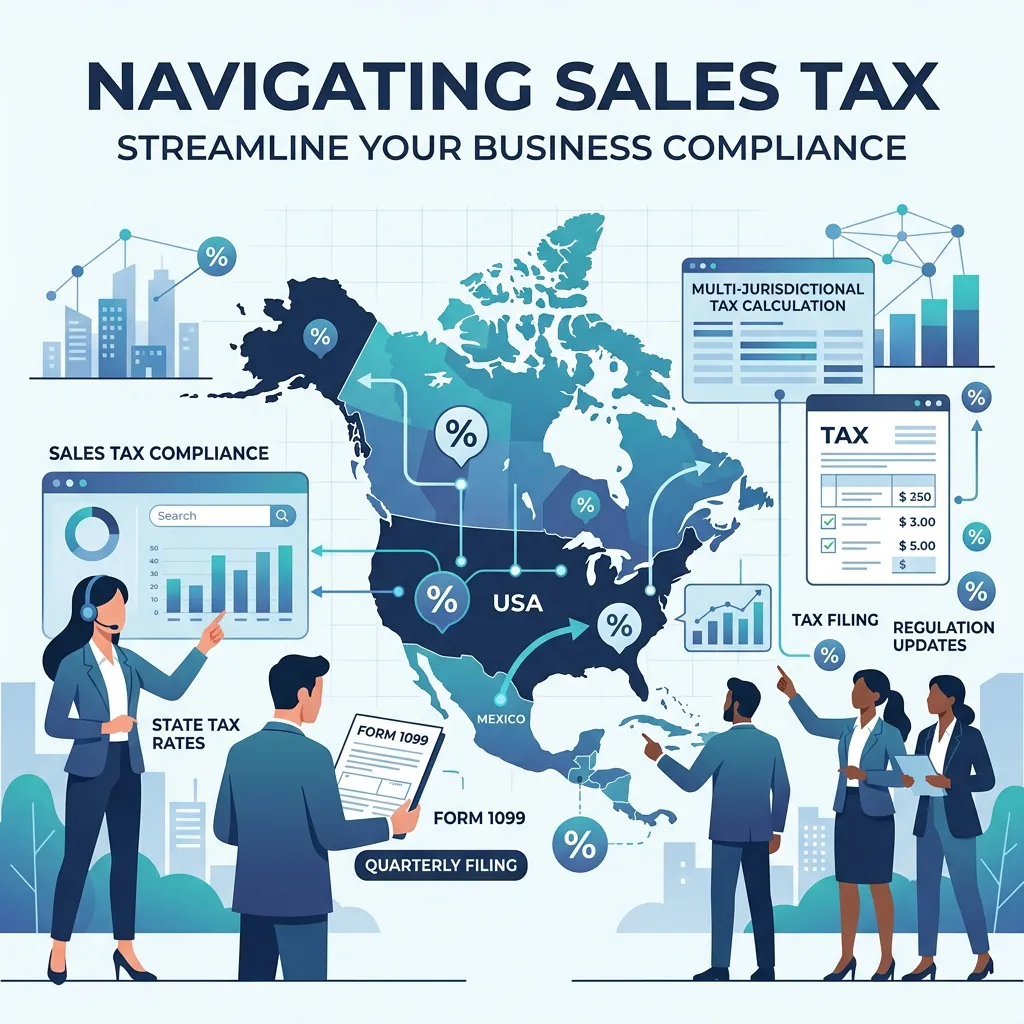
Introduction: Why Understanding Cross-Border Sales Tax Matters
For freelancers operating in North America, understanding the nuances of cross-border tax compliance is essential. Failing to collect sales tax when required can lead to massive retroactive liabilities, penalties, and audits that can bankrupt a small business. In the United States, sales tax is largely determined by physical or economic nexus at the state level. Conversely, Canada relies on a federal Goods and Services Tax (GST). Navigating these overlapping and constantly evolving jurisdictions is critical for protecting your bottom line and maintaining legal compliance.
In today's highly interconnected global economy, establishing a robust financial foundation is no longer just an option—it is a critical necessity for survival and long-term prosperity. As markets become increasingly saturated and competition intensifies across every sector, the margin for error in financial planning and execution has shrunk significantly. Many professionals and businesses operate under the assumption that top-line revenue growth will naturally resolve any underlying operational inefficiencies. However, this is a dangerous misconception. Without a deep, granular understanding of the mechanics that drive profitability, even the most innovative products and services can succumb to cash flow crises, regulatory penalties, or unsustainable cost structures. Understanding the foundational principles of this topic empowers decision-makers to pivot strategically, optimize their resource allocation, and build resilience against unforeseen market fluctuations.
Furthermore, the advent of digital transformation has democratized access to advanced financial tools and analytics, meaning that your competitors are likely already leveraging these insights to capture market share. To maintain a competitive edge, it is imperative to shift from a reactive financial posture to a proactive one. This involves not only grasping the high-level concepts but also meticulously applying them to your daily operational workflows. Whether you are an independent freelancer navigating the complexities of international trade, a growing startup trying to optimize your burn rate, or an established enterprise seeking to refine your cost control measures, the principles discussed here will serve as a compass. By integrating these strategies into your core business model, you can unlock hidden value, streamline your administrative overhead, and ultimately drive sustainable, scalable growth that withstands the test of time.
Core Mechanics of Sales Tax Nexus and Calculation
- Economic Nexus Thresholds: The specific revenue or transaction count (e.g., $100,000 or 200 transactions) in a US state that triggers an obligation to collect tax.
- Origin vs. Destination Sourcing: Determining whether to charge the tax rate based on where your business is located (origin) or where the client is located (destination). Most interstate digital sales use destination sourcing.
- Canadian Small Supplier Limit: The CAD $30,000 threshold over four consecutive calendar quarters; below this, Canadian freelancers do not need to register for or collect GST/HST.
- Zero-Rated Exports: Services provided by a Canadian to a non-resident (e.g., US client) where the GST rate applied is effectively 0%, allowing input tax credits to still be claimed.
- Total Invoice Calculation: Service Price + (Service Price * Applicable Jurisdiction Tax Rate).
Implementing these frameworks requires a systematic approach and a commitment to continuous monitoring. It is not enough to simply run a calculation once and assume the job is done. Financial metrics are dynamic; they evolve in tandem with your business, influenced by external economic pressures, shifts in consumer behavior, and internal operational changes. Therefore, establishing a routine cadence for reviewing and updating these figures is paramount. This might involve setting up automated dashboards, conducting monthly financial reviews with your team, or partnering with specialized advisors who can provide objective, data-driven perspectives. The goal is to create a feedback loop where financial insights directly inform strategic decisions, ensuring that every dollar spent or earned is maximizing its potential impact on your bottom line.
Moreover, the psychological aspect of financial mastery cannot be overstated. Ambiguity breeds anxiety, whereas clarity breeds confidence. When you have a precise understanding of your financial mechanics, you are better equipped to negotiate contracts, set competitive yet profitable pricing, and weather temporary downturns without resorting to panic-driven measures. This level of financial literacy transforms your role from a mere operator to a visionary leader capable of steering the organization toward its long-term objectives. As we delve deeper into the specific formulas, real-world applications, and frequently asked questions, keep in mind that these tools are designed to empower you. They are the building blocks of a resilient business architecture that can adapt, thrive, and consistently deliver value to both you and your stakeholders.
In conclusion, embracing these methodologies is a continuous journey rather than a destination. The landscape of commerce is ever-shifting, with new regulatory requirements, technological advancements, and economic paradigms emerging regularly. Staying informed and agile is your best defense against obsolescence. We encourage you to not only absorb the information presented but to actively test and refine these models within the context of your own unique business environment. The theoretical knowledge is only as valuable as its practical application. By taking deliberate, calculated steps to implement these strategies today, you are laying the groundwork for a more profitable, secure, and successful tomorrow.
Real-World Scenario: Crossing the Economic Nexus Threshold
Imagine a successful SaaS consultant based in Texas who sells digital training courses and consulting packages to clients across the US and Canada. Initially, their sales in New York were small. However, after a successful marketing campaign, their total sales to New York-based clients hit $120,000 in a single calendar year. Because New York's economic nexus threshold for tangible personal property and taxable services is $300,000, they might assume they are safe. But if they cross the threshold in another state with a lower limit, say $100,000, they instantly create an economic nexus in that state. If they fail to realize this and do not register to collect that state's ~7% sales tax on the next $50,000 of sales, they become personally liable for $3,500 in uncollected taxes, plus severe penalties. Similarly, if they exceed CAD $30,000 in sales to Canadian consumers, they must register with the CRA to collect GST/HST, though B2B sales might be handled via reverse charge mechanisms.
Frequently Asked Questions
Do I need to charge US clients sales tax if I live in Canada?
Generally, no. As a non-resident without physical presence or economic nexus in a US state, you typically do not collect US state sales tax, but economic nexus laws are expanding, so always monitor your sales volume by state.
Are digital services taxable?
It depends heavily on the jurisdiction. In the US, some states tax digital goods and SaaS, while others exempt them. In Canada, most digital services are subject to GST/HST if sold to Canadian residents.
What happens if I forget to charge tax?
The tax authority will hold your business liable for the uncollected amount. You will have to pay the tax out of your own pocket, along with potential interest and penalties.